
Historical narratives are the final, polished products we present in monographs and academic journals. Yet before reaching this point of supposed “perfection”, or, at least, publishability, we engage in a great deal of “dirty work” that rarely finds a place in respectable academic venues. This work is nevertheless essential: the trials and errors, methodological choices, discarded paths, technical operations, and experiments that constitute the research process actively shape the historical findings we ultimately present.
Documenting and opening these methodological “black boxes” becomes increasingly important at a time when historical research is itself increasingly mediated by algorithms and AI models. As more interpretative and analytical operations are delegated to, or performed in interaction with, computational systems, understanding how historical knowledge is produced requires us to make these processes visible and open to critical scrutiny.
The neologism docunarrative, formed by combining “documentation” and “narrative,” responds to this imperative for greater methodological transparency in historical research and to the need for a new kind of digital hermeneutics (Fickers 2022). A docunarrative provides a space and a format for documenting and sharing the methodological choices, experiments, uncertainties, and contingencies that lead to a historical finding. In doing so, it recognizes that the story behind the research process is not merely ancillary to the historical narrative: it is intellectually significant in its own right and therefore deserving of its own narrative.
This page showcases a series of such docunarratives that have underpinned both published research and works in progress. Additional examples, including code and research materials, can be found on my GitHub page.
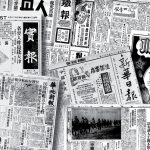
What story can be told from a simple list of newspapers? Drawing on the series of Newspaper Directory of China, published between 1931 and 1937, this series of docu-narratives combines statistical analyses and data visualizations to map the evolving landscape of the Chinese press in the early twentieth century. Compiled by the American journalist and advertising agent Carl Crow (1884–1945), the directories provide detailed information on more than 700 periodicals, including their founding dates, languages, periodicity, circulation, physical dimensions, publishers, and geographic distribution.
Each docu-narrative focused on a specific dimension or method:
- Physical format
- Circulation
- Publishers
- Multivariate analysis
- Biterm topic modeling and analysis of titles in English and Chinese

This study presents a computational analysis of China National Knowledge Infrastructure (CNKI) literature on study abroad (留學) in modern China, aiming to offer a more systematic and nuanced overview of existing scholarship on the topic. It reveals that while Japan and the United States have consistently been the primary focus of research since 1957, the theoretical frameworks employed have evolved significantly over time. These shifts reflect broader national and international developments, including the Reform and Opening-up era beginning in 1978, the resumption of intellectual exchanges in the 1980s, the rise of global and transnational studies, and institutional changes within Chinese academia. Using methods like topic modeling, the study identifies four distinct periods, each corresponding to a dominant paradigm: (1) The Revolutionary Paradigm (1957–1989); (2) The Modernization and Globalization Paradigm (1990–2002) (3) The Nation-Building and Anti-Imperialism Paradigm (2003–2014); (4) A more complex and fragmented scholarly landscape emerging over the past decade.
This study serves as the introduction to the Twentieth-Century China special issue on “Rethinking Study Abroad in Modern China“, published in January 2026. The dataset and accompanying documentation for this analysis are available on the dedicated GitHub repository.

This study critically examines the binary framework that has historically depicted Chinese students who studied in Japan as revolutionaries and those educated in the United States as modernizers. Drawing on a corpus-driven approach, this research systematically analyzes articles from Dongfang Zazhi (1905–1948), a major intellectual journal, to uncover the evolving discourses surrounding these two groups of returned students. By applying computational methods—including topic modeling, sentiment analysis, and named entity recognition—this study identifies key themes, values, and historical contexts that shaped perceptions of foreign-educated Chinese elites.
Findings indicate that while real differences existed between these two cohorts, their portrayals were far more fluid and contingent on China’s shifting diplomatic and political landscape. Japan-educated students were initially lauded for their contributions to constitutional reform and nation-building but later faced increasing skepticism, particularly following Japan’s imperial expansion in the 1930s. Meanwhile, American-returned students, though often seen as less politically engaged, were widely recognized for their contributions to scientific and industrial modernization. However, critiques of both groups emerged, with concerns about Japanese-trained students’ superficial grasp of Western knowledge and American-returned students’ detachment from China’s societal needs.
Additionally, this study highlights the role of authorship in shaping narratives, demonstrating how generational divides, educational backgrounds, and professional affiliations influenced perceptions of study abroad. Older generations, shaped by the trauma of national decline, often viewed overseas education as a strategic tool for self-strengthening, while younger scholars embraced it as a means of fostering global integration. Ultimately, this research challenges oversimplified dichotomies and argues for a more nuanced understanding of how foreign-educated elites were perceived within China’s intellectual and political discourses during the Republican period.
Topic:
The documentation for this paper is divided into four related scripts:
- Corpus building and modeling (liuRi)
- Corpus building and modeling (liuMei)
- Authorship analysis (liuRi)
- Authorship analysis (liuMei)
For more details, please refer to the dedicated GitHub repository.
This series of scripts accompanies and supports an in-depth study of social and intergenerational mobility among Chinese students educated in the United States during the late Qing and early Republican periods. The study is based on the Who’s Who of American Returned Students (遊美同學錄), published in 1917 under the auspices of the Tsinghua Returned Students Bureau.
- Introduction
- Metadata
- Data Extraction
- Statistical Analyses
- Tables
- Networks
- Sequence Analysis (coming soon…)
Part of this study, focusing on intergenerational mobility, will be published in the special issue Rethinking Study Abroad in Modern China in Twentieth-Century China. Another segment, examining individual career trajectories, will appear in the collective volume Taming the Digital Dragon. For more details, please refer to the dedicated GitHub repository.
The following docu-narratives revisit the old debate on the Chinese public sphere through the joint empirical study of two key institutions – a transnational organization (the Rotary Club) and the Shanghai press, which has been recognized as the first mass medium for disseminating information in modern China and which constituted the very venue through which non-state organizations like the Rotary Club shaped their social and discursive practices. Methodologically, this research relies on structural topic modeling to map out the four modus operandi of the transnational public sphere from a bilingual and dynamic perspective during the troubled decades between the end of WWI and the Communist revolution (1919-1949). It further employs named entity recognition (NER), network analysis, and geographical information system (GIS) to analyze the network of actors involved in the transnational public sphere and map its geographical contours in both presses. Finally, this research relies on text analysis, including words frequency and semantic networks, to compare the terminologies and values associated with the public in the Chinese and English presses. his documentation was produced to accompany the journal article titled “Shaping the Transnational Public Sphere in Republican China: Discourses and Practices of the Rotary Club in the Shanghai Press (1919-1949)” published in the Journal of Digital History. The complete code and data are available on GitHub.
Tropic:
- Topic modeling the Chinese press (based on Shenbao 申報): full code here.
- Topic modeling the English-language press (ProQuest collection): full code here.
- Summary tables of topics.
- Populating the public sphere: configurations of actors (code for Chinese, code for English)
- Mapping the public sphere: Rotary’s geographic imagination(s) (code for Chinese, code for English)
- Articulating the public sphere: key terms and semantic constellations (code for Chinese, code for English)
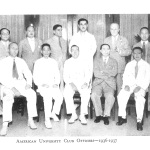
This tutorial series applies a place-based methodology to study Sino-American alumni networks in modern China, based on a directory of the American University Club of Shanghai published in 1936. It is divided into four parts:
Tropic:
- Find and analyze places using the R package “Places” (html version, Markdown version)
- From places to networks (a dual approach): Build, visualize and analyze place-based networks using igraph (html version, Markdown version).
- Community detection in place-based networks (igraph): Identify and analyze subgroups of places (igraph) (html version, Markdown version).
- Place formation over time: Create period-based subnetworks to analyze the formation of academic places between 1883 and 1935 (html version, Markdown version).
Extensive findings from this research are published as a chapter in the collective volume Modern China in Flux. For additional insights into the methodological framework, see the related paper published in RZine.

This series of docu-narratives aims to demonstrate how historians of modern China can take advantage of the “enpchina” R package to explore massive press corpora. Based on a concrete case study – the Rotary Club of Shanghai 上海扶輪社 (Shanghai fulunshe) – we focus on the leading Chinese newspaper Shenbao 申報 (1872-1949) and the ProQuest Chinese Newspapers Collection that contains a dozen of English-language periodicals published in Shanghai, Beijing and Guangzhou between 1850 and the early 1950s.
Tropic:
The Rotary Club in the Chinese Press: A Practical Guide to the “enpchina” R package. This guide shows how historians can take advantage of the “enpchina” R package to explore the entire collection of the Chinese newspaper Shenbao 申報 taking the Rotary Club of Shanghai上海扶輪社 (Shanghai fulunshe) as a case study (Rmd version).
The Rotary Club in the English-language press: A Practical Guide to the “enpchina” R package. This guide shows how historians can take advantage of the “enpchina” R package to explore the entire ProQuest Chinese Newspapers Collection taking the Rotary Club of Shanghai as a case study (Rmd version).